
Yes on Question 15: A Permanent Office of Data and Innovation for Honolulu
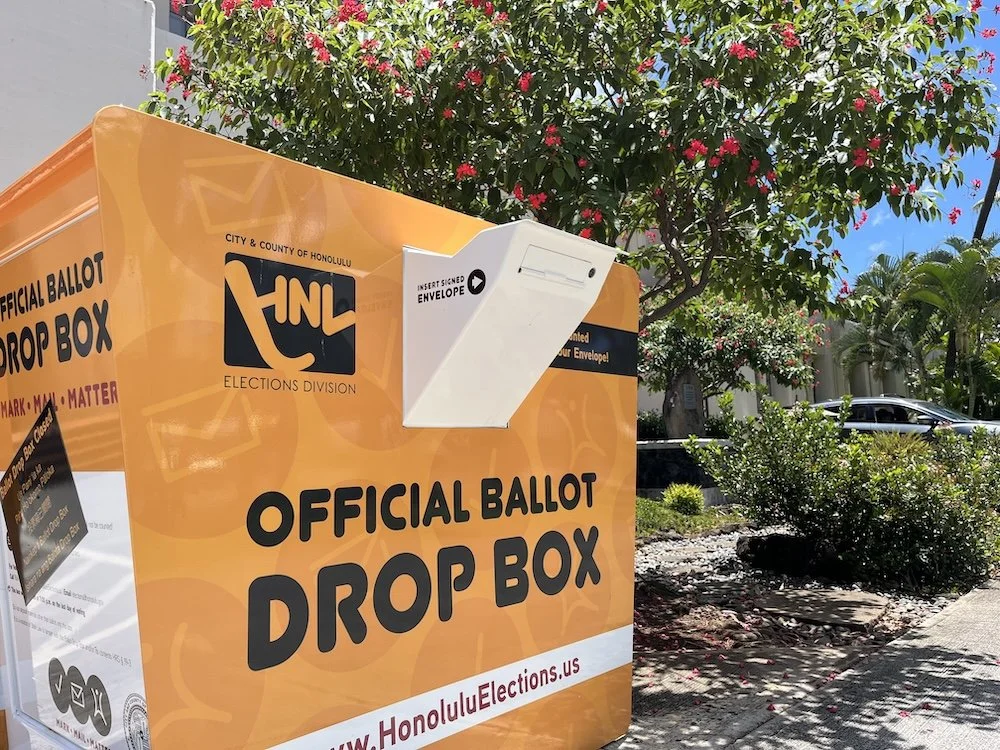
On November 3, 2026, Hawaiʻi will hold its general election. Honolulu voters will weigh in on ballot measures, selected by the Charter Commission from proposals submitted by residents, organizations, and agencies from the City and County of Honolulu, to amend the City Charter. From food security to affordable housing to data management, these ballot measures ask residents to directly shape government priorities and accountability. This election, we strongly support Question 15, which asks whether the City should establish an Office of Data and Innovation to create strategy, standards, and accountability for how the City manages its vast amount of data.
What Question 15 Would Do
Each proposal will appear on the ballot as a question. Voting “yes” is a vote to pass a proposal. Question 15 asks:
Should an Office of Data and Innovation be established to use data to improve city services, promote government transparency and civic engagement, ensure that the city uses artificial intelligence responsibly, and protect residents’ digital privacy?
Currently, the City Charter establishes a Department of Information Technology (Section 6-1201) responsible for operating and maintaining the City’s information technology and telecommunications systems. However, the mandate of this department does not include data management, analytics, or governance. Further, the Charter does not designate any office or officer as responsible for citywide data governance, for using data to improve service delivery, or for protecting residents’ digital privacy. In 2022, City Ordinance 22-31 created a Chief Data Officer position and two data specialist positions to address these issues. However, future administrations or the City Council could change, defund, or even eliminate these positions at any time without a public vote.
If Question 15 passes, it would add language to the City Charter that establishes an Office of Data and Innovation led by its executive, known commonly as the Chief Data Officer. This change would:
Make the Office and positions more durable: Rather than depending on an ordinance that can be changed without a public vote, Question 15 would make the Office a permanent and integral part of City government.
Clarify accountability and reporting: Question 15 specifies that the Office of Data and Innovation would report to the Managing Director, ensuring accountability and clear delineation of responsibilities.
Establish citywide standards and strategy: Question 15 requires the Office of Data and Innovation to provide citywide direction for data standards, strategy, privacy, AI use, and innovation rather than leaving it up to individual departments.
Importantly, given this function and roles already exist, this change would come with no additional cost to taxpayers.
Why Question 15 Matters
Every time a resident calls 311, applies for a permit, or rides TheBus, that interaction generates information. Multiply that across every city department, every day, and the scale of City data becomes apparent. Question 15 calls out four main responsibilities for the Office of Data and Innovation. These responsibilities address issues that, in large part, did not exist a generation ago. As technology advances and plays a growing role in government and daily life, the City needs to keep pace.
Better City Services. Developing a data strategy and standardized data management practices across all City offices will improve government efficiency and ultimately result in improved delivery of services to residents. This could look like streamlining application processes for human services, making smarter budget decisions, or simplifying pathways for the public to submit feedback on services.
Government Transparency. Public access to appropriate data, while still protecting residents’ privacy and individual rights, increases government transparency and accountability. Although this data currently exists, much of it is difficult to find or work with. Standardizing data management across City offices will make this data more accessible, making government operations more visible and easier to understand.
Responsible Use of Artificial Intelligence. Artificial Intelligence (AI) is a powerful tool that is gaining widespread adoption across all sectors, including government. AI has the potential to improve decision making, service delivery, and overall efficiency across City operations, but it also carries significant security and ethics risks. Because AI technology is evolving rapidly, the City needs to proactively develop clear protocols, ethics standards, and strategies to govern its use of this tool. The City’s Chief Data Officer has already made great strides in creating and codifying AI protocols and standards, and this work provides a strong foundation as the City continues to build out its governance approach.
Digital Rights and Privacy. As interactions between the public and government become increasingly digital, residents’ digital rights and privacy face growing risks. Within the digital sphere, residents are potentially exposed to identity theft, leaked information, and discrimination based on information collected about them, whether actively or passively. We have observed that the Chief Data Officer has already started foundational work on data rights and privacy. Voting yes on Question 15 will make the Office of Data and Innovation and Chief Data Officer responsible for developing and enforcing standards that protect residents’ information and limit its use to appropriate purposes.
The Choice Before Voters
Data and AI are already reshaping how government functions. The question before voters is whether the City will actively shape that transformation with care, or whether it will simply be carried along by it. Shaping that transformation will require devoted staff and active management, precisely what an Office of Data and Innovation would provide. A yes vote signals that Honolulu residents expect the City to take seriously it’s responsibility to protect their information, use data ethically, and govern well. If you agree that this is the responsible choice, we encourage you to share this article with other Honolulu voters and vote “yes” on Question 15 in November.