
Hawaiʻi Funding Project: Simplifying Public Funding Research
From nonprofit organizations to policymakers, academic researchers, and community groups, public funding information is an integral part of informing decisions and understanding critical issues. One of the questions that inspired the development of our Hawaiʻi Funding Project was “How hard is it to find public funding information?” What we discovered is that accessing this information in a meaningful way often requires navigating multiple layers of government websites and documents and can be an arduous process for which most people do not have the time and resources.

A Case Study: Finding Hawaiʻi Public Library Funding Information
To illustrate the challenges of accessing public funding information, let’s say we are interested in understanding the funding situation for Hawaiʻi public libraries to support advocacy efforts. Here are the steps needed to collect that data manually:
STEP 1: START THE SEARCH
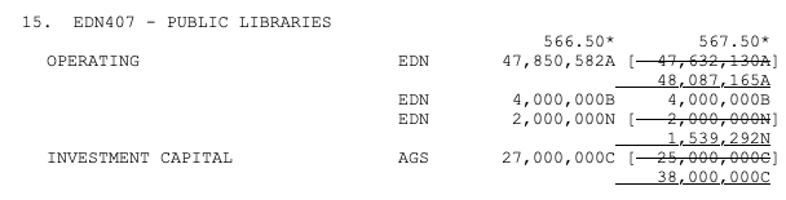
We would start with the state budget bill, which is a very long document with multiple versions. Even if we can find the relevant information by searching the page with a keyword or program ID, the tables are difficult to understand without budget expertise:
STEP 2: TRACK CHANGES
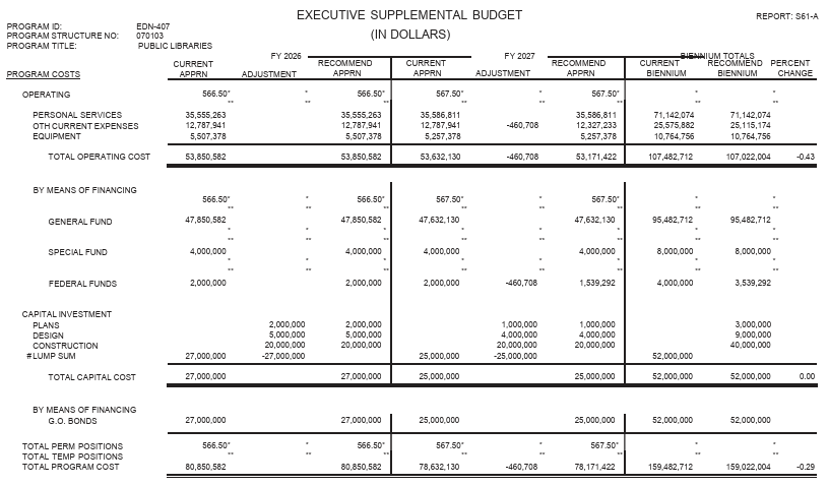
Our next step could be checking each version of the budget bill to see how funding changed over the course of the legislative session. This requires finding the relevant lines in each version of the budget and comparing the math for the House draft (HD), Senate draft (SD), and Conference draft (CD), as well as the Executive Supplemental Budget if we want to know what the Governor originally proposed. However, the budget proposals are organized differently than the actual budget bills. To compare the funding amounts, we would need to understand how the budget sheet is set up:
STEP 3: GRANTS AND CAPITAL IMPROVEMENT PROJECTS
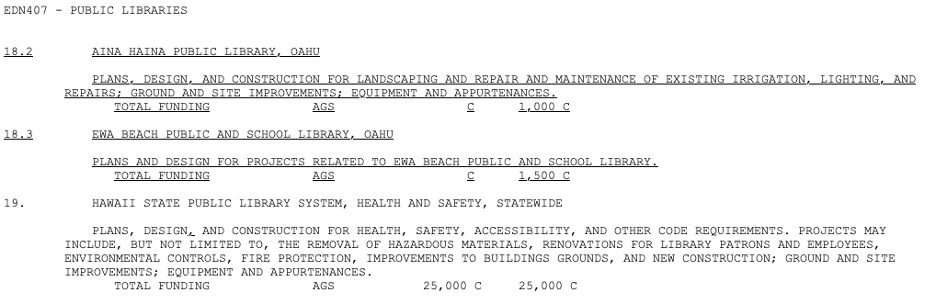
If we want to know if there are any related grants or capital improvement projects, we would go to the CD version of the budget bill and search through Parts IV and V, respectively. These sections are dense with coded information, making them difficult to decipher, and include hundreds of entries.
STEP 4: CONTRACTS
If we want to know about any related contracts, we need to leave the state budgets. There are two sources to find contract data, the first being the Hawaii Awards & Notices Data System (HANDS), which does not connect directly to a program ID, so we would have to make assumptions in connecting contracts to the program ID of interest. A lesser-known option is to navigate the backend directory of the State Capitol website, which can be reached through the website’s “Archives” page.
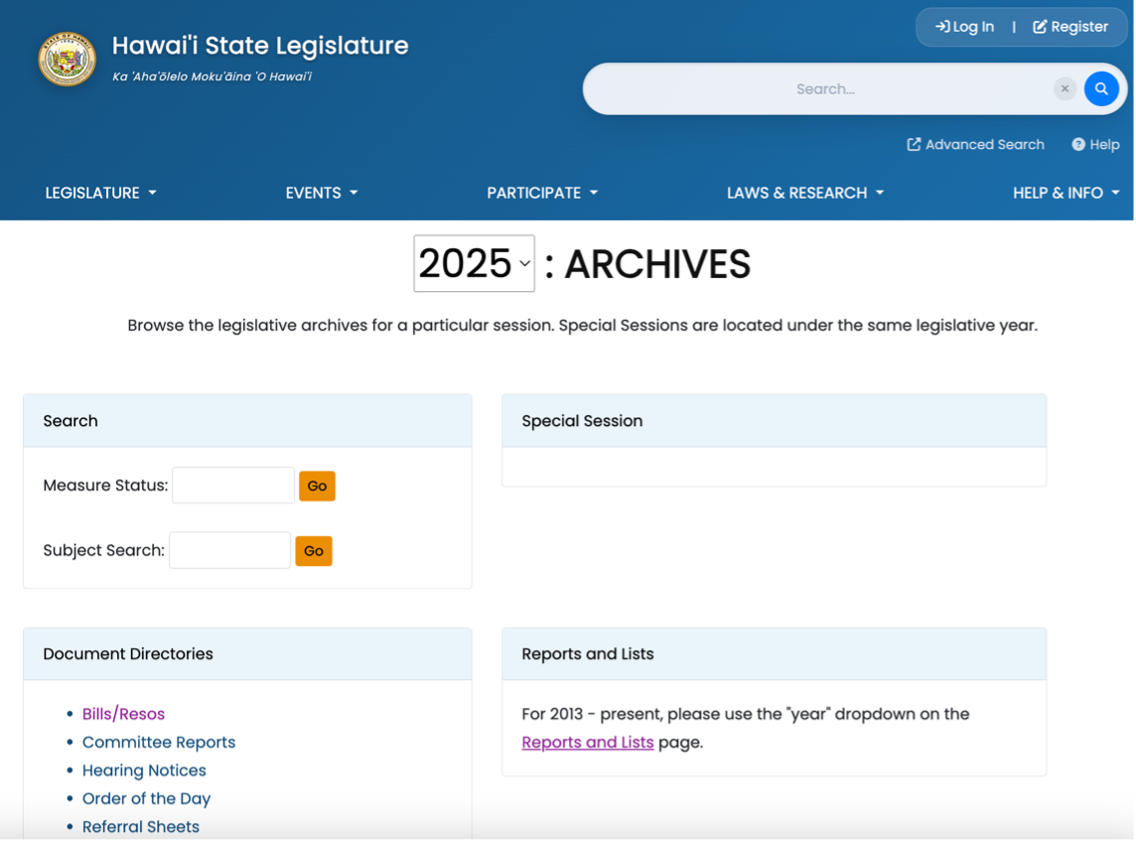
Which leads to many directory pages like this:
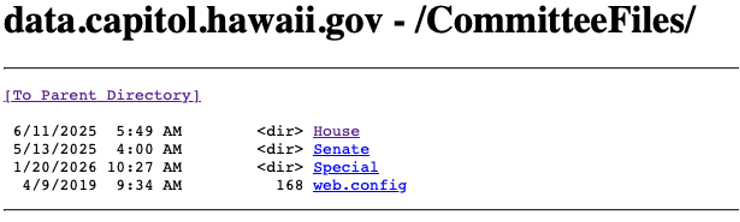
Again, this information is publicly available but is largely inaccessible. To find anything here, we really need to know how to navigate this system for what we are looking for. For example, a table of program-related contracts can be found in annual departmental reports to the legislative financial committees. For the House report we would navigate to: House > Finance Committee > FINFiles > EDN-Tables-2025 > Find and search “Active Contracts”:
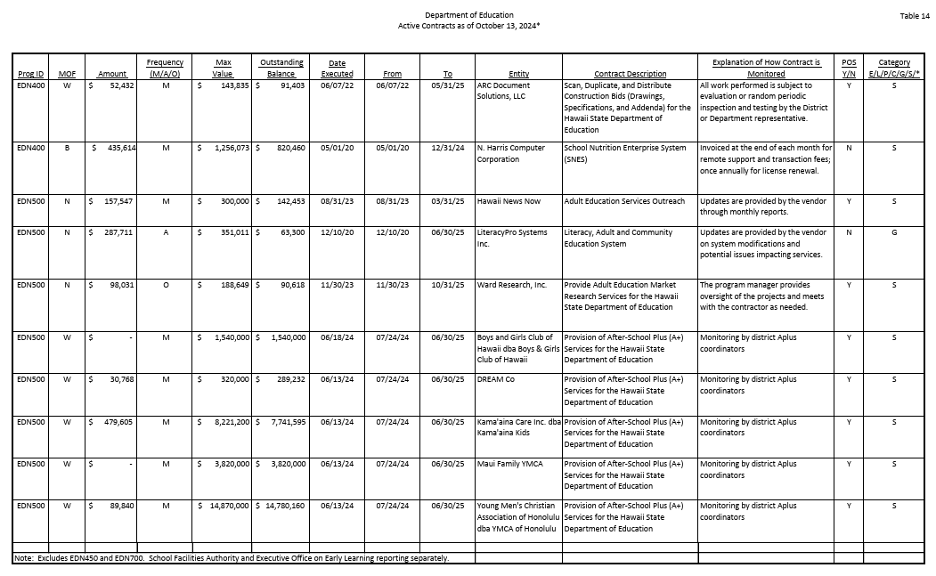
We would then repeat this for the Senate Ways and Means (WAM) committee reports.
STEP 5: ACTUAL SPENDING
Finally, if we want to know planned versus actual expenditures (i.e., what was spent) and how effective a program was, we need to go to the State Department of Budget and Finance’s variance report. Within the Department of Education, where Public Libraries sit, there are variance reports for each program that also include data behind their measures of effectiveness, program activity, and program target group.
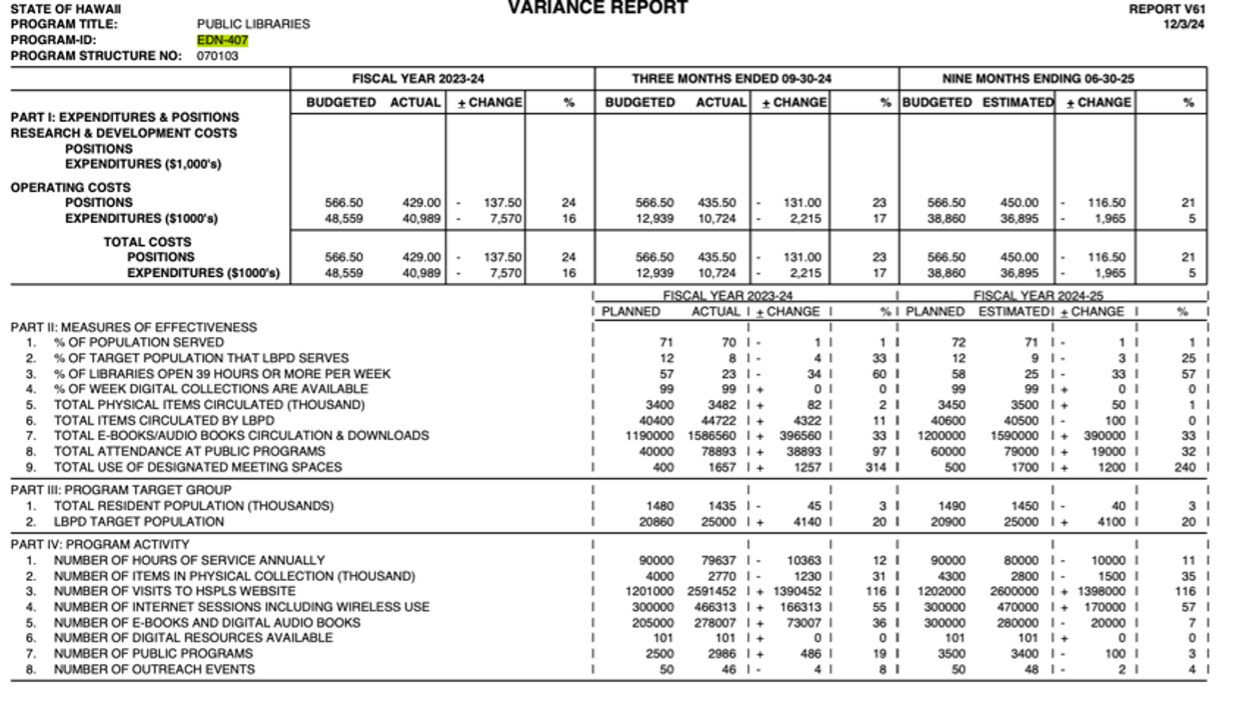
Phew! And that’s just for one year!
Challenges to Finding Public Information in Hawaiʻi
The library case study would not necessarily yield comprehensive data, and it assumes familiarity with the department, program, and the workings and websites of the State legislature and multiple State agencies. This case study surfaces various challenges to finding public information in Hawai‘i:
Locating information: Budget and program information comes in many different locations and forms, from department reports to multiple versions of budget bills for a single year. It can be difficult to know whether a particular data source is accurate, complete, and up to date. Understanding where to search, what to search for, and which versions are most relevant requires a significant understanding of the budgeting process. Similarly, contract, grant, and program information are all distributed across different unlinked locations and require prior knowledge to access.
Accessibility: Terms like CD, SD, and HD; budget codes; and the organization of budget documents may not be easily accessible to the average person. Government websites with budget data, while publicly available, are often not optimized for public use.
Identifying trends over time: To identify trends over time, the process must be repeated for each year, making longitudinal data collection time consuming.
Volume of data: To find data about a specific program or topic, large amounts of data must be sorted through.
Labeling inconsistency: Minor differences in terminology across multiple data sources make it difficult to reliably search documents. For example, a single program ID may appear as “EDN407,” “EDN-407,” or “EDN 407” across different data sources.
Investing in Accessibility
It doesn’t need to be this hard. We developed the Hawaiʻi Funding Project to make funding data more accessible to everyone, removing the need for those interested to spend hours digging for data and building expertise in navigating government websites, tables, and reports. By collecting, processing, and presenting data in a format that is accessible, our Hawaiʻi Funding Project exists to help users answer questions, follow curiosities, and make informed decisions. In addition to our existing tools, we will be launching a variance report database and Program ID search tool soon!